
The wave had a crest, and it was 2019
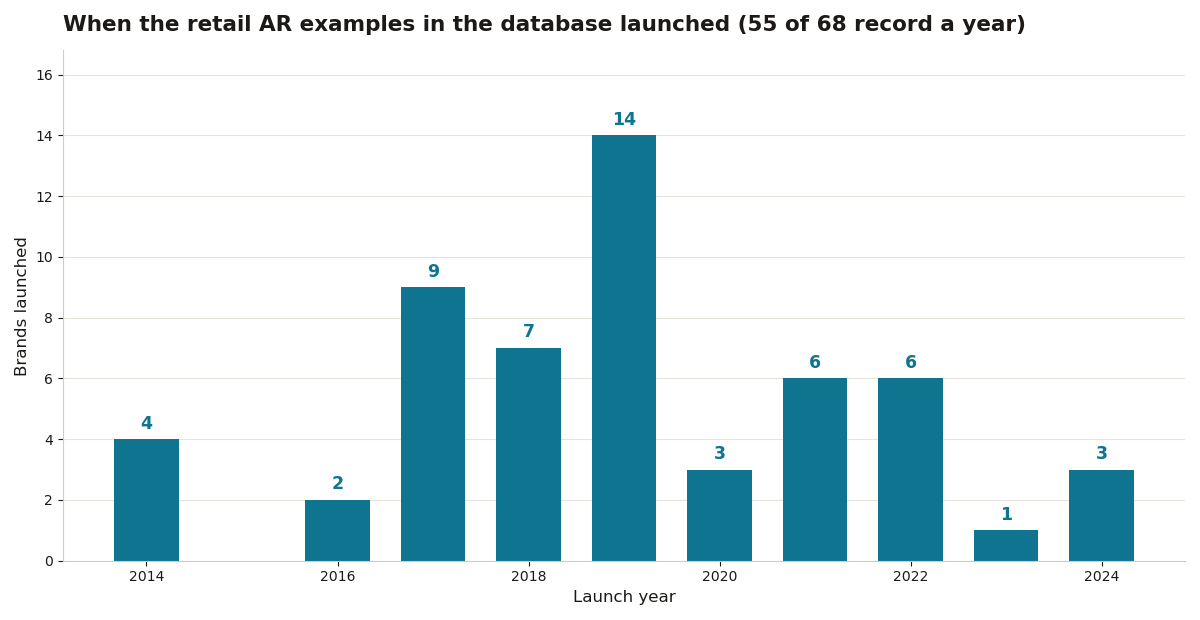
Retail AR is usually described as steadily rising. The launch dates in our database of 68 brand deployments tell a lumpier story. Fifty-five records carry a launch year: 4 in 2014, 2 in 2016, 9 in 2017, 7 in 2018, and a peak of 14 in 2019, more than any other two early years combined. Then the curve falls: 3 in 2020, 6 each in 2021 and 2022, 1 in 2023, 3 in 2024.
Why 2019, and why the dip is not a death
The 2019 crest sits two years after ARKit and ARCore made phone AR a platform feature rather than a novelty app, which matches the lag of enterprise procurement: pilot in 2018, launch in 2019. The 2020 dip arrived exactly when retail teams froze discretionary projects, and the launches that continued were disproportionately try-on and visualization tools that served locked-down shoppers. Fewer launches after 2022 does not mean fewer deployments; it means the announcements slowed while the early movers kept their tools running, which a launch census cannot see.
Read the census honestly
This is a database of notable deployments, not an industry registry: famous brands are overrepresented, quiet B2B tools are underrepresented, and 13 of the 68 records carry no launch year at all. What the timeline can support is the shape, not the totals: experimentation, a platform-driven land grab, a pandemic interruption, and a consolidation phase where the question moved from whether to launch to what the launch earned.
The next entries will look different
The post-2022 records in the database skew toward WebAR and configurator depth rather than standalone apps, the pattern the vendor census also shows. When the next peak comes, it will be counted in features shipped inside existing stores, not in app launches, and databases like this one will have to count differently.