
Why cars took to AR first and furthest
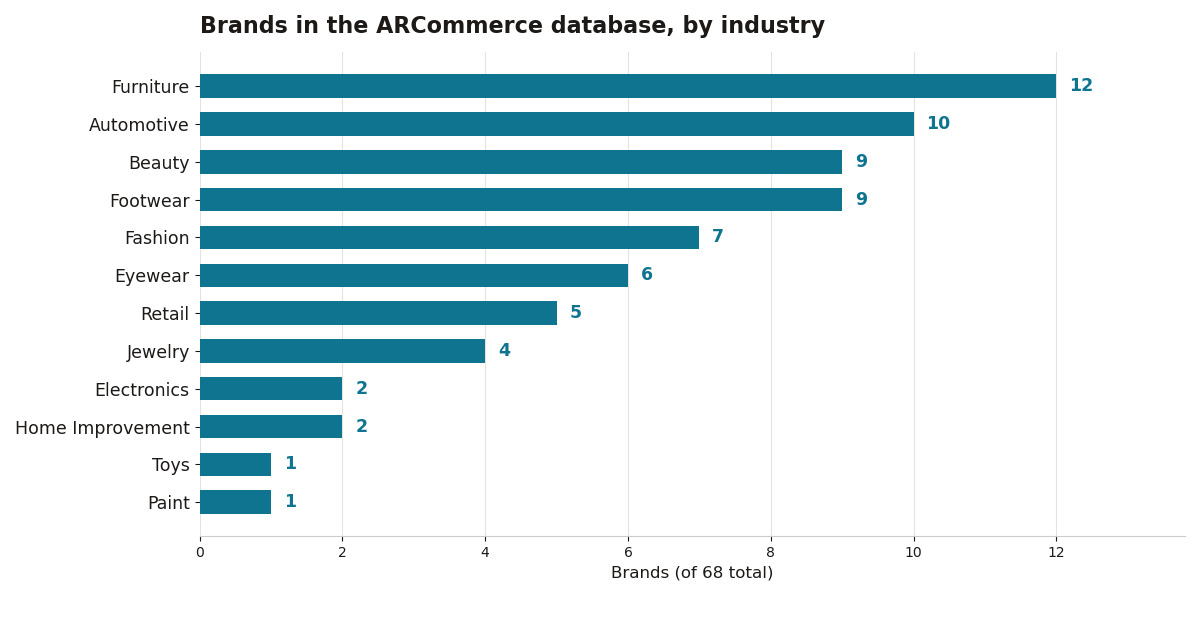
A car is the most configurable expensive object most people buy, and the showroom can only hold a few of its combinations. Ten of the 68 brands in our AR database are automotive: BMW, Audi, Porsche, Mercedes-Benz, Toyota, Ford, Hyundai, Kia, Volkswagen and Volvo. Their tools cluster on one job, letting a buyer build the exact car and then stand next to it, at real size, in their own driveway or living room.
The three patterns in the records
First, real-size placement: BMW's i Visualiser, Porsche's AR Visualizer and Mercedes' cAR app all scan the surroundings and integrate the configured vehicle into them. Second, sync with the web configurator: Porsche's app pulls the same configuration the buyer built on the website, so the driveway view is of their car, not a demo car. Third, no-download reach: Toyota's WebAR showroom places the Corolla in the browser, and Kia put a 3D Stinger GT inside Facebook Messenger, meeting buyers inside apps they already had.
What the car pattern teaches other industries
The automotive records show AR working hardest where three conditions meet: high price, deep configuration, and a physical footprint the buyer needs to judge in their own space. Furniture shares all three, which is why it leads the database; beauty shares the first two and substitutes the face for the space. Industries with none of the three mostly get novelty deployments, and the database's thinner categories show it.
Try the pattern before the platform
For a brand outside automotive, the transferable asset is not the app; it is the configured 3D model, reused across the website, the AR view and the ad units. The directory keeps each brand's use case on its record, so the pattern for your industry can be read off the brands that already shipped it.